


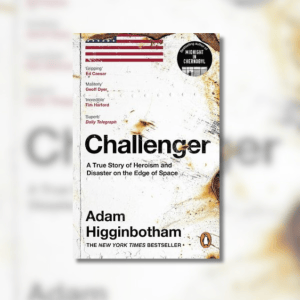
The definitive, dramatic, minute-by-minute story of the Challenger space shuttle disaster based on fascinating in-depth reporting and new archival research – this is riveting history that reads like a thriller.
On the freezing-cold morning of 28 January 1986, the space shuttle Challenger broke apart over the Atlantic Ocean, killing all seven people on board. Millions around the world witnessed the tragic deaths of the crew, which included New Hampshire schoolteacher Christa McAuliffe. Yet the full story of what happened that day – and the ominous warning signs recognized but then ignored in the years before – has never been told.
Following a handful of central protagonists – from the astronauts and their families to the rocket engineers who tried to stop the fateful launch – Challenger is a gripping tale of human over-reach; of cynicism and cost-cutting; of hubristic ‘go fever’; and of an investigation driven by heroic leakers and whistle-blowers determined to bring the truth to light. Blending human drama with fascinating science and political infighting, Challenger is a masterpiece of non-fiction storytelling.
I purchased a copy of this book for my own reading.
I don’t read a great deal of non-fiction, but if the subject interests me enough I will give it a go. I’ve always been fascinated by space travel and its inherent dangers, so have always had a morbid curiosity into the Challenger shuttle disaster. I knew much of what occurred, but this book promised to deep-dive into what caused one of the worst space disasters.
I already knew the basics of the story – that ultimately budget pressures and time crunches lead to cost and corner cutting to meet an almost impossible schedule for a phenomenally complex piece of technology and engineering led to unacceptable risks and ultimately the lives of seven brave astronauts were lost. After all, John Glenn famously said of the Mercury Redstone missions: “I felt exactly how you would feel if you were getting ready to launch and knew you were sitting on top of two million parts — all built by the lowest bidder on a government contract.” In the context of future disasters, it’s an ominous statement, but at the time it was nothing more than a cynical quip.
The depth of research the author has put in, the reports he’s cited and interviews he’s referenced is beyond impressive. It’s possibly the deepest dive I’ve seen into one of the worst space disasters. The levels of corruption, cost-cutting and cover up is incredible, all to try and shift the blame. It made for a fascinating read that was really eye-opening.
My rating:


